
For interactive Visual Merchandising
With no absolute rules, visual merchandising emerges as a blank canvas that could be filled with...

Why Visual Merchandising Theory Is So Important
Visual merchandising is a contradictory career choice. As an industry, it attracts artistic personalities eager to make their mark with creative ideas and artistic displays. It’s often seen as the ‘fluffy’ part of retail, but the reality is that creativity is there to serve strategic thinking and commercial focus.
Brand guidelines and planograms are the most essential tools in a visual merchandisers kit. Communicating strategy, the look and feel for a season and commercial focuses are vital to a cohesive look and a strong identity that works across retail estates. For many global chains, they enable every store to look identical, usually strategically planned by a handful of directors. But those layouts and displays have been implemented by hundreds of different VMs diligently following guidelines. This ‘paint by numbers’ approach to the most creative sector of retail means that unless you are at the top of the VM ladder, you are most likely following someone else’s creative vision.
That said, this approach is also what makes visual merchandising such an accessible career. There are no specific statistics available on the exact number of visual merchandisers with formal training, but many successful professionals in this field have gained practical experience through internships or part-time jobs rather than official qualifications. It’s a ‘learn from the ground up’ kind of role in many cases. This practical, hands-on approach provides an excellent training ground for understanding customer behaviour, however, companies rarely support this with tailored learning and development programmes specifically for the visual merchandiser role.
This is a factor that educational establishments have picked up on. Courses specific to visual merchandising are still relatively new. Those that do exist have an additional emphasis on the subject of ‘Visual Merchandising theory’.
‘VM theory’ is the science of shopping, understanding why consumers buy what they do, how they behave in stores and how retailers can influence that. Rather than being visual-based, the topic nods to psychology and science and therefore is completely at odds with the so-called ‘fluffy’ side of VM.
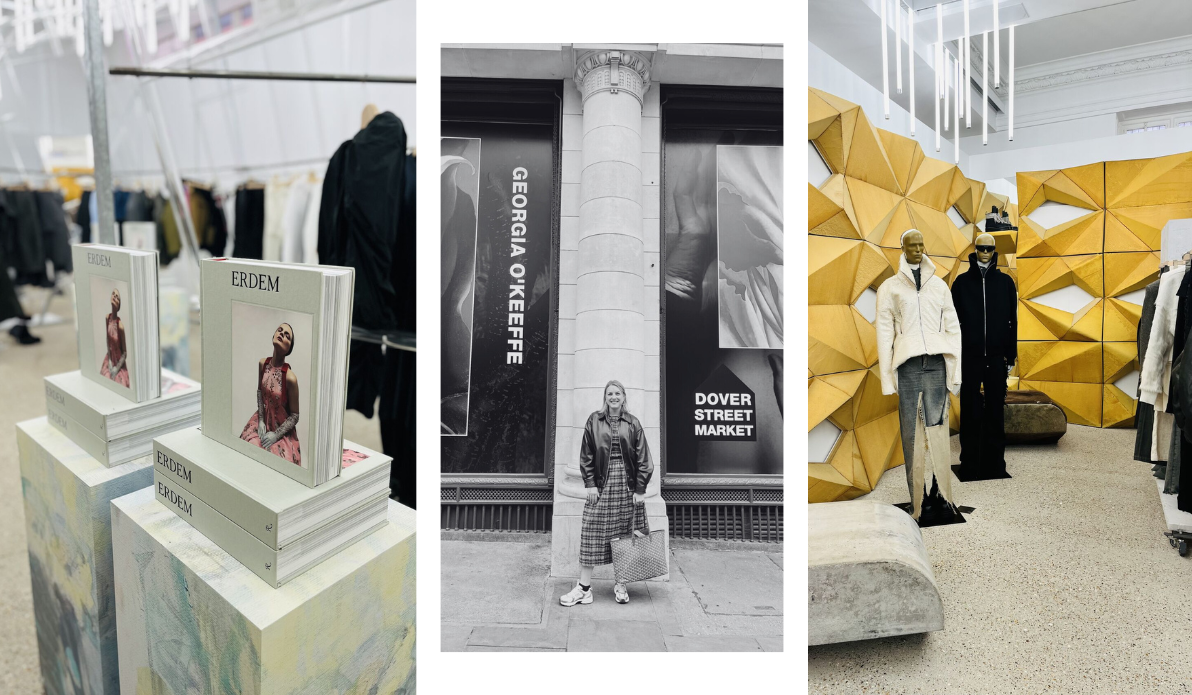
Sarah Manning 👆🏻 teaches a variety of Visual Merchandising courses at The University of Arts London, she explains:
“understanding Visual Merchandising theory is crucial for VMs and for those looking to get into the industry because it gives them the foundation to make informed, strategic design decisions rather than relying only on intuition or creativity. The visual merchandising courses I teach for UAL teaches students the science behind shopping behaviour, blending creativity, psychology, and strategy to create retail spaces that attract customers and drive sales.”
Formal training can be transformative but is not always a requirement for entering the profession. And so those VMs trained on the shop floor often miss out on that academic background to their role. Most novice VMs will be taught how to dress a mannequin and how to present product. Many too will be trained in understanding KPIs vital to the business. But what’s often missing is exposure to the broader toolkit of strategic visual merchandising, such as:
Familiarity with terms such as ‘dwell time’, ‘sight lines’, ‘adjacencies’ and ‘customer flow’ isn’t needless jargon but aims to upskill VMs for a rounded career in retail, where they can converse with key stakeholders from all departments and at all levels. Companies that do champion these skills through VM workshops and training sessions tend to build a stronger talent pipeline. Taking people off the shop floor and into the classroom gives new perspective and promotes learning. This, in turn, creates a commercial mindset that should inform the basis of every visual merchandising decision.
In his book ‘Why We Buy’, Global Retail Expert & Strategic Advisor, Paco Underhill states that:
“the science of shopping is a hybrid discipline – part physical science, part social science, and only part science at all, for it is also partly an art. But it is a practical field, concerned with providing information that can improve a merchant or marketer’s edge.”
To underestimate the ability of visual merchandisers to grasp this science is to do a disservice to some of the most adaptable and knowledgeable people in retail. Upskilling shop floor staff to be able to understand the ‘why’ behind tasks empowers them to adapt guidelines thoughtfully, not just follow them. Investment in training is not just about succession planning but about enriching existing roles, boosting engagement, and driving loyalty. Targeted workshops and training sessions are a kick-off point where VMs can start to think of new ways to approach their roles and retail spaces.
Guidelines are the backbone of any visual merchandising tool kit but with the right training, team members are empowered to think commercially and strategically rather than mechanically and adapt guidelines to work as best they can for each specific site. Ultimately retailers should ask themselves who they want their visual merchandisers to be: team members that simply follow direction or key innovators in the business, well versed in commercial and brand strategies?