Retail 2025: What the New Consumer Really Wants
French version Recognize this photo👆🏻? It’s from AMI’s neighborhood celebration for the launch of...

A Complete Guide to Creating Makeup and Cosmetics Displays That Convert
Having creative and well-stocked shelves is a best practice in just about every retail category, but in the beauty industry, captivating displays are absolutely critical. With 81% of beauty shoppers preferring to purchase products in-store, it's essential to design displays that attract attention and drive conversions.
This guide will shed light on effective strategies for enhancing your retail space, from establishing brand consistency to creating makeup and cosmetics displays that drive sales.
Let's dive in.
The first step to creating displays that convert? Understand what drives people's purchase decisions as they browse your merchandise. Generally speaking:
_ A growing number of health and beauty consumers are influenced by personal interactions such as consultations.
_ A notable 75% of consumers expect personalized experiences from beauty brands, emphasizing the importance of tailored interactions in influencing purchase behavior.
_ Among Gen Z consumers, 53% prioritize quality, while 63% consider price as a key factor in their purchasing decisions
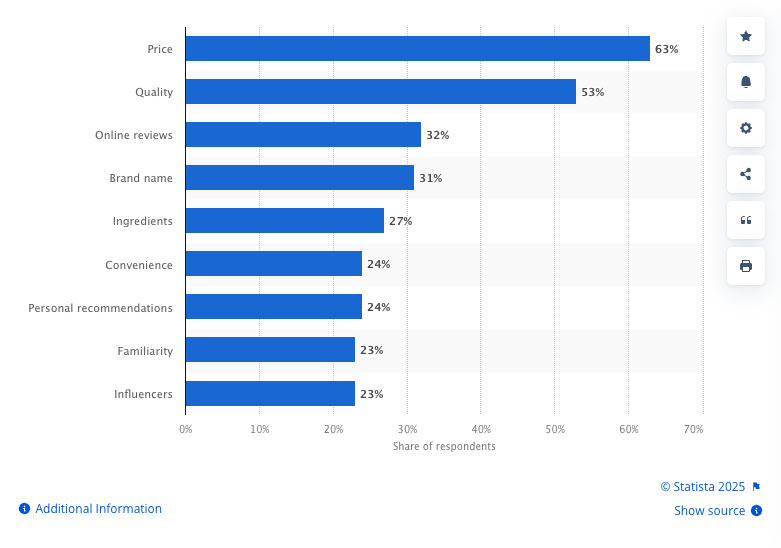 That being said, nothing beats analyzing your own store data, so be sure to assess your specific customer preferences and behaviors to tailor your displays accordingly.
Track your sales and product performance alongside in-store programs, campaigns, and retail display initiatives. Doing so will help you identify what resonates with your customers so you can make data-driven adjustments that enhance engagement and sales.
Pro tip: If you're using planogram software or a visual merchandising solution, see if you can integrate sales data into your analysis.
For example, IWD's retail software allows you to integrate sales data to visually analyze shelf, fixture, or store zone sales performance. This enables you to identify slow movers, optimize recommendations, and increase sales. Features include leveled sales metrics at the product, category, shelf, or store zone level and heat maps indicating hot spots and cold zones.
Consistency is key when it comes to brand recognition and trust. Your makeup and cosmetics displays should reflect your brand's unique identity—from color schemes and typography to messaging and product arrangement. Industry data shows consistent branding can increase revenue by up to 23%.
As such, ensure every display aligns with your brand's aesthetic, values, and customer expectations.
If you have multiple locations, maintain brand consistency by sharing visual guidelines and providing standardized display templates. You can also track compliance through store audits and inspections, as well as real-time feedback from regional managers. For example, you can have local store teams send photos back to HQ to ensure displays meet brand standards.
Set up eye-catching displays with bold visuals, strategic product placement, and interactive elements to captivate shoppers and drive sales. Consider the following tips.
Colors evoke emotions and drive purchasing behavior. Warm tones like red and orange create urgency, while soft pinks and neutrals convey elegance and trust—ideal for beauty displays.
Studies show that up to 90% of snap judgments about products are based on color alone. Leverage this by aligning your display hues with your brand identity and target audience preferences to create an engaging shopping experience.
One notable example of effective color psychology in cosmetics displays comes from Laneige, a South Korean beauty brand renowned for its consistent use of pastel hues.
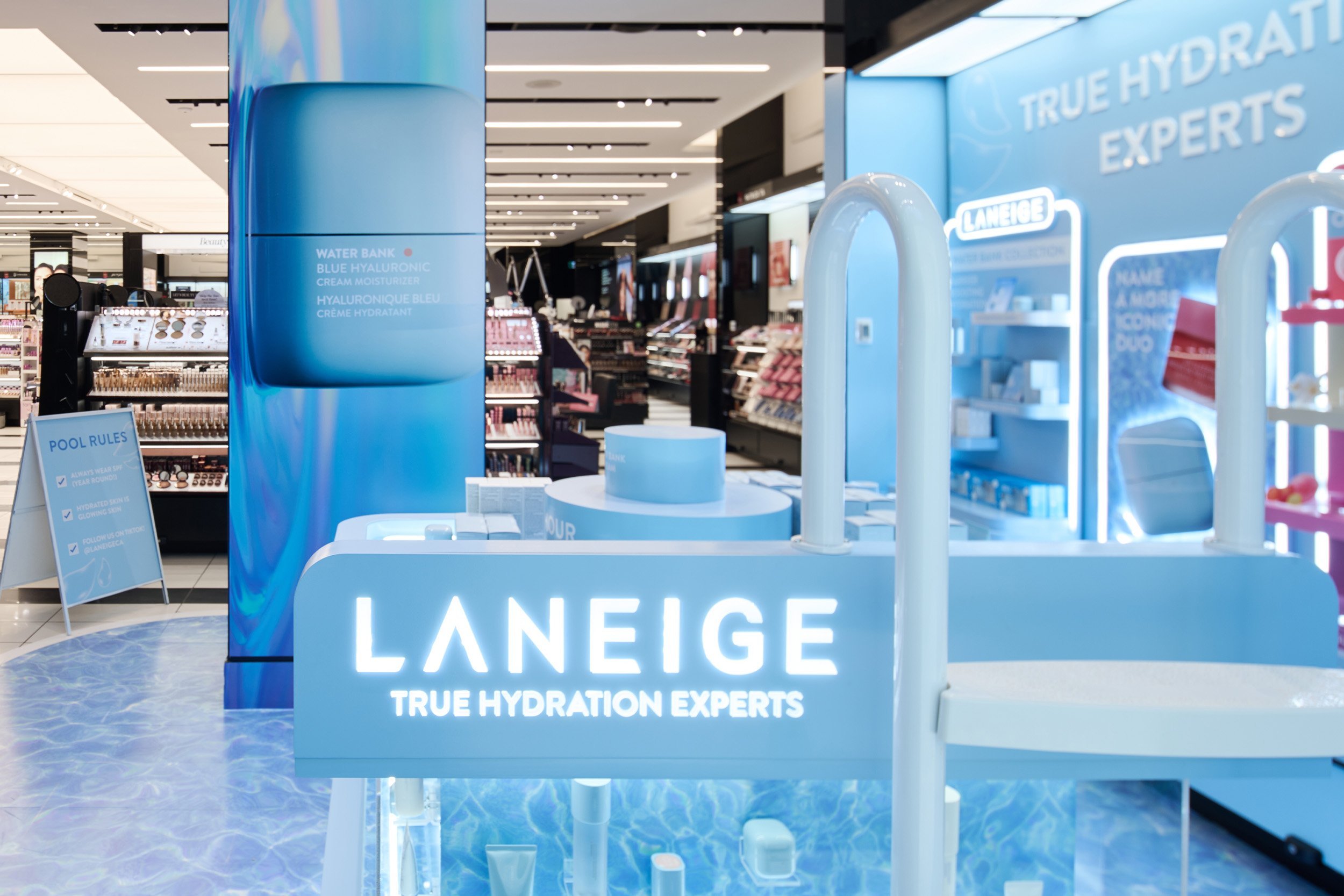
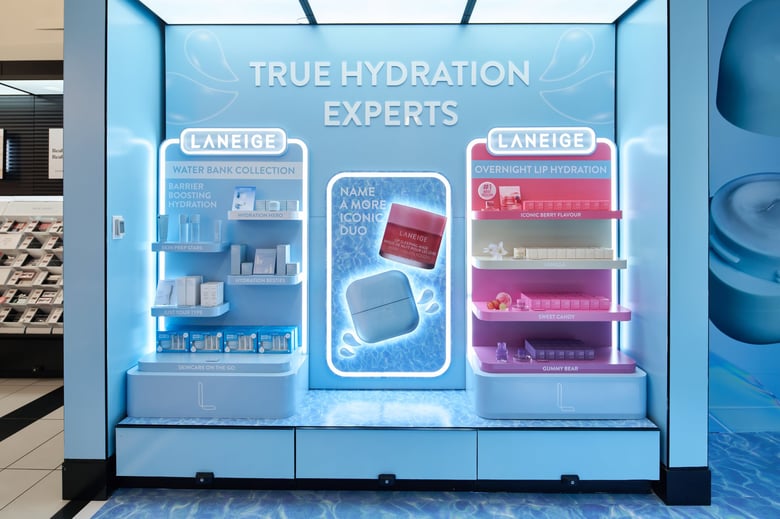 Sephora Retail Pop-Ups x LANEIGE - Pack Creative Studio
Laneige’s pastel color palette evokes an image of youthfulness and innovation that attracts its target audience.
The cohesive pink-themed displays create an inviting and memorable in-store experience, enhancing brand recognition and customer loyalty. For example, they use a distinctive palette of blues as a visual signature for hydration.
Lighting plays a crucial role in how shoppers perceive your products. While the best lighting choice depends on your brand and display objectives, understanding the effects of different lighting tones can enhance the shopping experience.
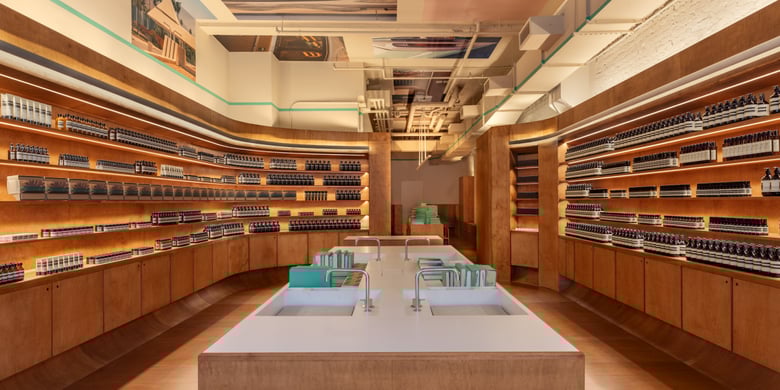
Warm lighting (yellow/golden tones) creates a cozy, inviting atmosphere, which could work great for luxury and skincare brands.
For instance, several Aesop stores use warm lighting in their displays to create a calm, inviting, and sensorial shopping experience that aligns with their minimalist and apothecary-inspired aesthetic.
 Aesop
Aesop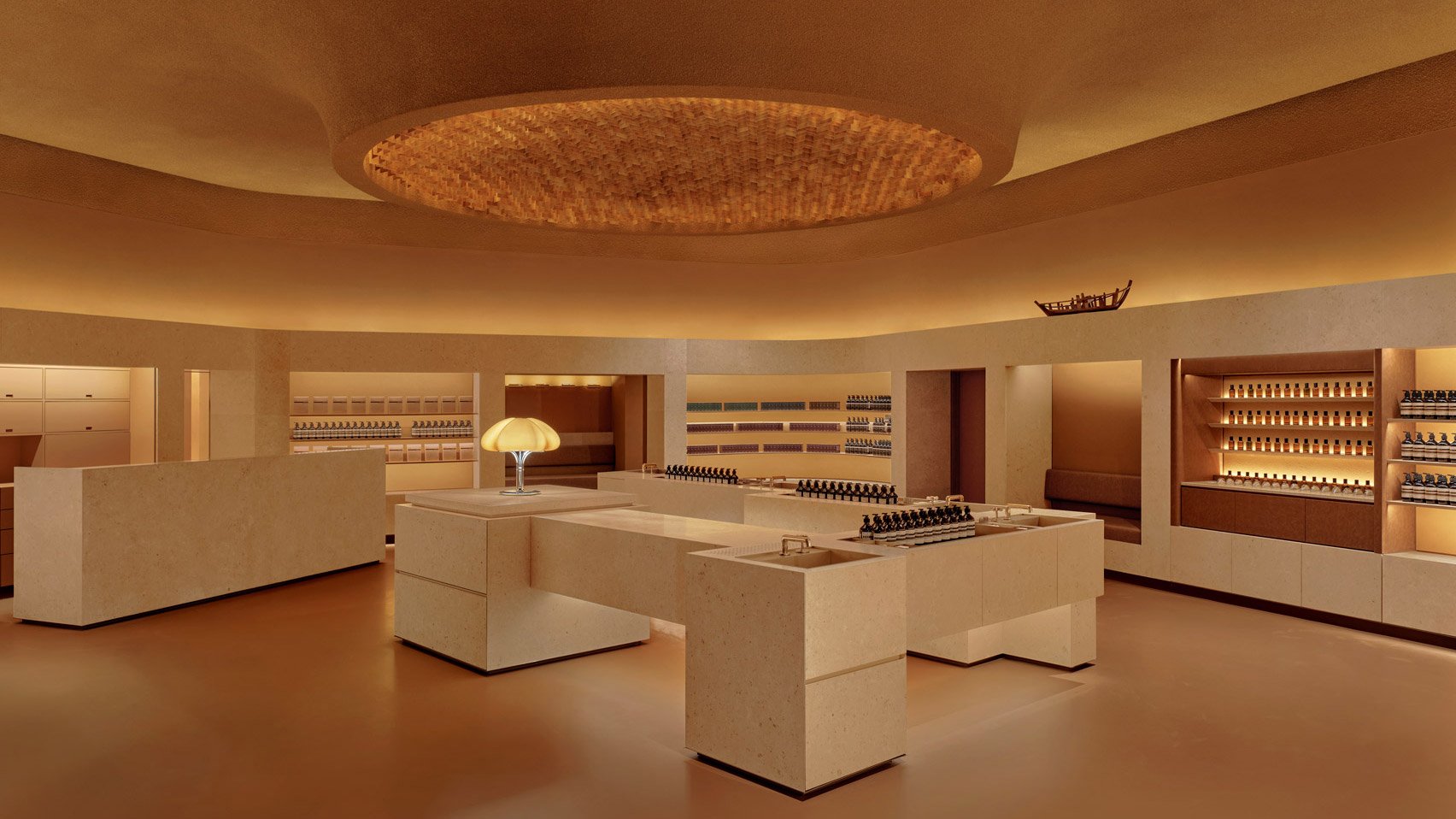
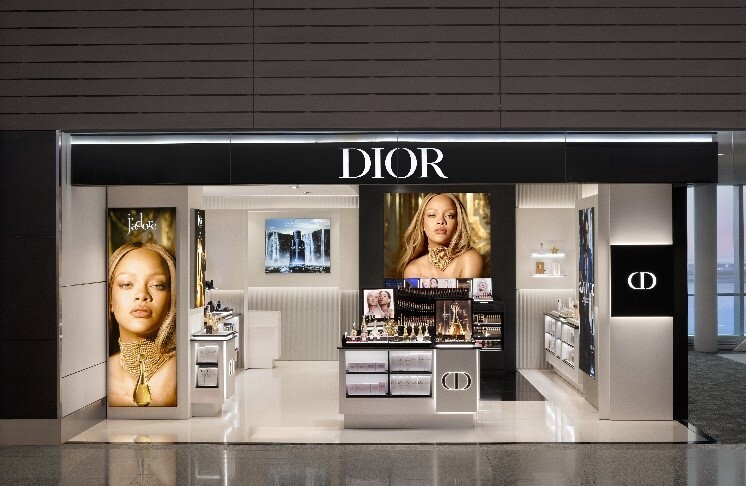
Meanwhile, cool lighting (white/blue tones) enhances clarity and precision, making colors appear more vibrant. That's why it's making an excellent choice for specific makeup displays. For example, Dior's Travel Retail Boutique employs cool lighting to highlight the vivid colors of its cosmetic products. The store's lighting ensures customers can accurately perceive shades and textures.
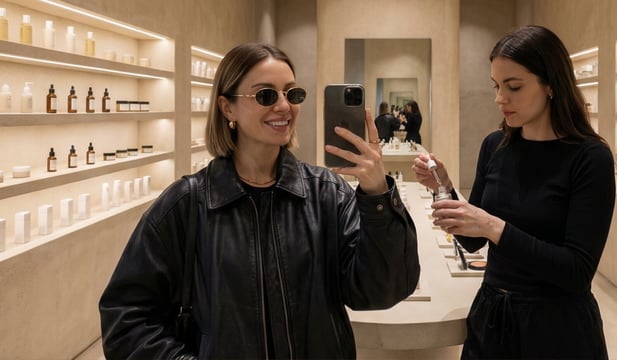
Position mirrors at eye level near product displays to encourage trial and ensure testers are clean, well-stocked, and easy to access.
Interactive experiences like product testing can enhance customer engagement and potentially increase conversion rates. That's why it pays to create a seamless, hygienic, and inviting setup for shoppers to experiment with products.
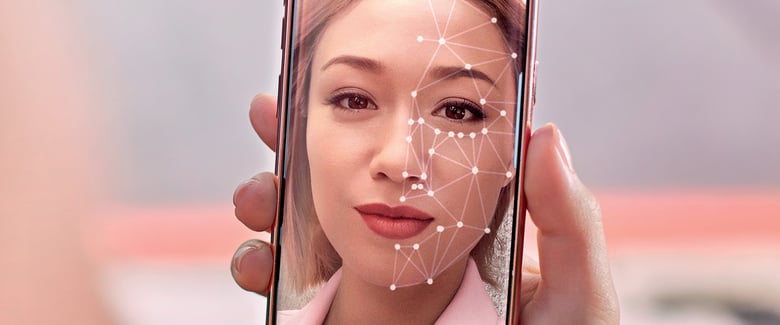
Tech can help you create immersive shopping trips that drive engagement and sales. Interactive screens, virtual try-on solutions, and QR codes offering product tutorials can help shoppers make informed decisions.
You could also consider augmented reality (AR) to let customers virtually test different shades, finishes, and products without physical application, reducing waste and improving hygiene.
Research cited by Forbes shows that 56% of consumers reported that AR technology increases their confidence in a product's quality and 61% preferred shopping at retailers that provide AR experiences. With that in mind, incorporating in-store technology (when it makes sense) could enhance your cosmetics displays, boost shopper confidence, and ultimately drive higher conversions.
Make your displays pop by using contrast and layering to create depth and visual interest. You could, for instance, combine different heights, textures, and colors to draw attention to key products while maintaining a cohesive look.
Here are some things to consider:
_ Bold backdrops
_ Tiered shelving and lighting to highlight bestsellers and new arrivals
_ Mixing matte and glossy finishes to create texture contrast
_ Mirrors or reflective surfaces to enhance dimension and depth
Well-structured displays can increase product engagement and dwell time, so creating dynamic (but still cohesive and on-brand) displays could lead to higher sales.
To stand out in the beauty industry, you need to know what you're up against. Study your competitors' displays—what's working, what's not, and where there's room to differentiate. Are they leveraging bold visuals, interactive elements, or exclusive in-store promotions? Identify gaps and opportunities to refine your own approach.
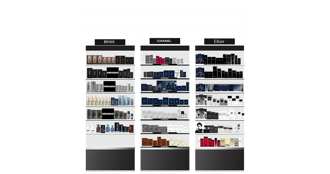
For best results, leverage solutions that allow you to compare your displays directly against competitors. IWD's planogram software makes this easy by visualizing your displays side-by-side with competing brands. This enables you to gain clear insights for enhancing your merchandising efforts.
Keep your displays fresh by regularly updating them to reflect new product launches, seasonal trends, and shopper preferences. A well-timed refresh can boost engagement and prevent display fatigue, keeping customers excited to explore.
How often should you refresh your displays? That depends on several factors, including the foot traffic in your area, how frequently you launch new collections, and customer buying patterns. That being said, a good rule of thumb is to do it every four to six weeks to maintain interest and align with shopping trends.
Creating high-converting makeup and cosmetics displays requires a strategic mix of branding, design, and technology.
The best way to create impactful cosmetics and makeup displays is to keep testing and refining your initiatives based on customer behavior and performance data to ensure ongoing success.
And remember—a well-designed display isn't just about aesthetics—it's a powerful tool to enhance shopper experience, build brand loyalty, and boost revenue.
For more insights and tools to optimize your retail displays, check out IWD's planogram and merchandising solutions.